
Quick answer
The most common sources are a drain valve, a water connection above the base, a temperature-and-pressure relief discharge routed toward the floor, condensation, or a corroded tank. The location of the puddle alone cannot confirm which one it is.
For water heater leaking from the bottom, the most useful first step is to identify the symptom safely and record when it occurs. Do not open a gas or electrical appliance or bypass a safety device to test a theory.
1. Drain valve or lower fitting
The drain valve is near the bottom of many storage tanks. A worn seal, damaged valve, or loose connection can leave a small wet area close to the base. Water from a higher fitting may run down the outside and collect in the same spot, so do not assume the lowest wet point is the source.
Look from a safe distance for a drip line or wet fitting. Do not force a valve that is stuck, and do not remove or cap it while the tank is hot or pressurized.
2. Relief-valve discharge
A temperature-and-pressure relief valve is a safety device. Water at its discharge pipe can mean the valve has opened, is leaking, or is reacting to a pressure or temperature condition. Blocking the outlet is unsafe because the valve must be able to discharge.
If the discharge is hot, flowing continuously, or unexplained, keep clear and ask for prompt assessment. The cause should be diagnosed rather than solved by plugging the pipe.
3. Connections above the tank
A cold-water inlet, hot-water outlet, shutoff, or nearby pipe can leak and send water down the tank shell. Corrosion at a connection can also make a small leak worse over time.
Tell the provider which connection appears wet and whether the leak changes when water is used. Do not tighten fittings on hot or pressurized equipment unless you are qualified to do so.
4. Tank corrosion or condensation
Condensation may appear temporarily under some conditions, but recurring water or water emerging from the tank seam is more concerning. A corroded tank body is not a safe object to patch with tape, epoxy, or sealant.
If moisture returns after the area is dry or the tank shell itself is wet, arrange diagnosis. A failed tank generally requires replacement, with water-damage mitigation considered separately.
What to do next
Use this short sequence to collect useful information before arranging service:
- Keep clear of water near electrical parts and do not step into standing water to reach a breaker or plug.
- If safe, protect belongings and close an accessible cold-water supply shutoff; do not touch the appliance if water or electricity creates a hazard.
- Note where the water appears, how fast it is spreading, the tank’s approximate age, and any noise or temperature change.
- Call to discuss a leak assessment and ask about provider availability, diagnostic fees, and what the visit includes.
Visual summary
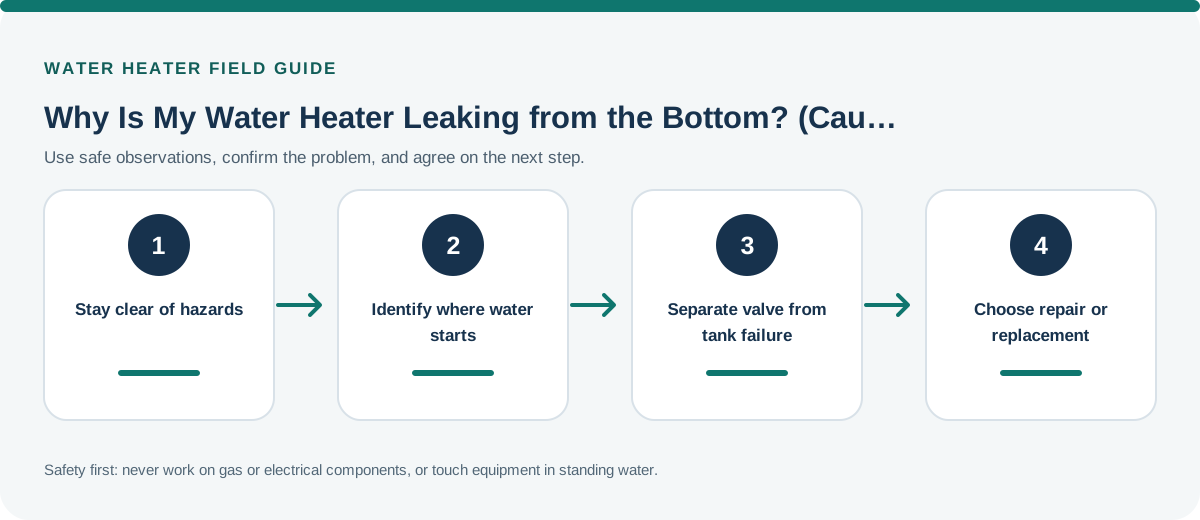
Quick comparison table
| Visible clue | Possible explanation | Next question |
|---|---|---|
| Drip at a fitting or valve | May be a repairable component | Ask for the exact source and a written repair scope. |
| Water from relief discharge | May indicate valve discharge or a pressure/temperature issue | Do not cap it; ask for safety diagnosis. |
| Water through tank shell or seam | Tank failure is likely | Compare replacement and damage-containment needs. |
| Small amount of moisture that does not return | Condensation may be possible | Monitor safely; recurring moisture still needs assessment. |
Benefits and trade-offs
What helps
- A clear source diagnosis can avoid replacing a tank when a smaller fitting is responsible.
- Early containment may limit damage to flooring, cabinetry, and nearby rooms.
What to avoid or consider
- A tank-shell leak is not a safe DIY patch project.
- Plumbing repair does not automatically repair damaged flooring, drywall, or adjacent units.
For why is my water heater leaking from the bottom? (causes & quick fixes), use this table as a comparison aid, not a substitute for site-specific diagnosis; equipment design, installation, condition, and property requirements can change the right response.
Frequently asked questions
Can I keep using a leaking water heater?
Do not assume it is safe. An active leak, hot discharge, electrical exposure, or gas odor needs prompt safety attention. Keep clear and seek an assessment.
Does water at the bottom always mean the tank is bad?
No. Water can travel down from a higher fitting or relief pipe. The source needs to be identified.
Can I plug the relief pipe to stop dripping?
No. It is a safety discharge path and must not be capped or blocked.
When is replacement usually needed?
When the storage tank itself has corroded through, replacement is generally required. A professional can distinguish this from a valve or connection leak.
What is the safest first step for water heater leaking from the bottom?
Start with the topic-specific first section, record what you observe safely, and stop if gas, electrical, or active flooding hazards are present.
Final takeaway
A bottom puddle is a symptom, not a diagnosis. Keep the area safe, note the visible source, and get the tank-versus-fitting distinction right before deciding between repair and replacement.
For water heater leaking from the bottom, keep the immediate safety steps separate from the longer-term repair or replacement decision. Confirm the provider, fee policy, and written scope before authorizing work.
For a local installation, confirm current permit and inspection requirements with the authority responsible for the exact property. The City of Boca Raton publishes electric and gas/tankless changeout guidance for work within city jurisdiction.